
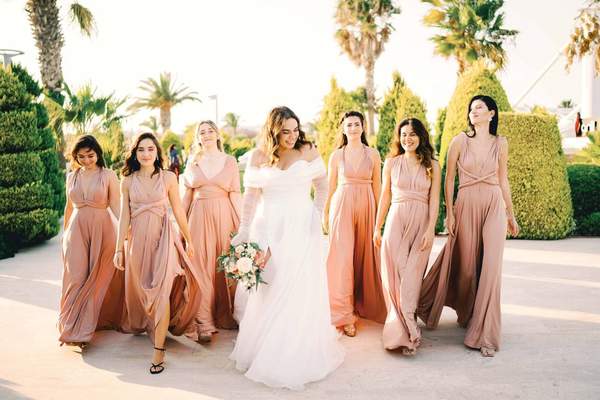
A bridesmaid dress can look gorgeous on a hanger and still feel wrong once someone has to walk, sit and dance in it for hours. The most flattering bridesmaid dress styles balance shape with comfort, rather than trying to make every member of the bridal party look identical. Silhouette, neckline, length and fabric all change how a dress fits and moves. The trick is to choose the features that matter most, then build a coordinated look around them.
Start with the silhouette, not the colour
Among all the decisions, bridesmaid dress silhouettes often have the biggest effect on how a gown feels. Think about where the fabric sits close to the body, where it releases and whether the wearer can move comfortably. No cut is universally flattering; fit and personal preference matter more than a supposed body-shape rule.
A-line: structured at the top, easy through the skirt
An A-line dress follows the bodice before gradually widening towards the hem. It creates a defined shape without clinging to the hips and is a reliable starting point for a group with different fitting preferences. Depending on the fabric, it can read as relaxed or formal. Check the waist seam’s position, as a seam that hits awkwardly can affect the entire look.
Empire waist: a softer, higher-waisted option
Empire styles gather or seam just beneath the bust, with fabric falling below. They can be comfortable for people who prefer less definition at the natural waist, although excess gathering may add volume. A softly draped empire dress works especially well for an airy, understated bridal-party look.
Sheath and slip styles: clean lines with less volume
Sheath dresses fall relatively straight, while bias-cut slip dresses can skim curves through the way the fabric is cut. These bridesmaid gown styles suit a minimalist aesthetic, but they demand attention to fabric weight and undergarments. A lightweight satin slip may show more seams and creases than expected, so trying it on in natural light is worthwhile.
Fit-and-flare: more definition and movement
Fit-and-flare designs hug the bodice and release lower down, creating a more shaped outline. They can be striking at formal weddings, but a narrow skirt or low flare point may limit steps and sitting comfort. Before committing, test the dress on stairs and while seated rather than judging it only in front of a mirror.
Choose a neckline that feels secure
Necklines frame the face and shoulders, but the best one is often the one a bridesmaid can forget about once the ceremony begins. A V-neck opens the neckline visually; square necklines offer a crisp, structured look; and scoop necks feel softer. High necklines provide more coverage, although comfort depends on the armholes and neck. Strapless styles need a secure, supportive bodice, while halter and one-shoulder cuts can affect bra choices. For mixed styles, agree on a general mood rather than one exact neckline.
Match the length to the wedding’s formality
Floor-length dresses often suit black-tie and formal evening celebrations, while midi and tea-length designs can feel appropriate for garden, daytime and less formal events. Shorter hems show more footwear and may be easier to manage outdoors. Yet formality is also shaped by material, colour and styling: a tailored satin midi can look dressier than a casual-looking maxi.
Consider the venue’s surfaces. A long hem sweeping across grass, gravel or a beach can become frustrating. If floor-length gowns are the choice, arrange alterations with the intended shoes, not an imaginary heel height. A consistent hem relationship to the floor looks more intentional than forcing everyone to wear the same shoes.
Fabric changes everything
Two dresses with the same cut can look completely different in chiffon and satin. Chiffon is light, often layered, and creates floaty movement; it may need a lining for coverage. Crepe generally offers a smooth, flowing appearance and can feel more substantial, depending on its weight. Satin catches the light beautifully, but some versions highlight wrinkles and underlayers.
Velvet brings depth to cooler-season evening celebrations, though its weight and warmth may be uncomfortable in hot weather. Tulle adds volume and softness but can snag against rough accessories. Fabric swatches help, yet a full-length sample or fitting reveals drape far better. For more detail on how materials photograph and feel, explore bridesmaid dress fabrics before choosing a style.
Coordinate the bridal party without forcing a uniform fit
Matching dresses are one option, not a requirement. For flattering bridesmaid dresses across a group, consider keeping a shared colour family, fabric and approximate length while allowing different necklines or silhouettes. The result can look cohesive in photographs while respecting individual proportions and coverage preferences.
For example, imagine four bridesmaids wearing muted sage at a semi-formal outdoor wedding. One chooses an A-line with sleeves, another a square-neck midi, a third a wrap-inspired maxi and the fourth a higher-neck design. If the fabrics have a similar finish and the shades are checked together in daylight, the group can feel coordinated without looking copied and pasted.
Do not rely entirely on online photos: lighting and screens can alter colours. Compare physical swatches side by side, indoors and outdoors. A guide to bridesmaid dress colours can help narrow the palette, while bridesmaid accessories can connect different necklines without identical jewellery.
Make the final decision in a fitting room
A good fitting is more than checking the zip. Ask each wearer to sit, raise both arms, walk briskly and bend to pick something up. Check that straps stay put and that the skirt does not pull across the thighs. Photograph the dress from the front, side and back in natural light, with permission. The goal is confidence in movement, not perfection in one pose.
Check the brand’s measurement chart instead of assuming standard sizes are consistent. Allow time and budget for hems, straps and bodice alterations, and confirm return policies before ordering multiple dresses. When someone feels supported and unrestricted, even a simple silhouette can look exceptional.
Frequently asked questions
What bridesmaid dress style flatters most body types?
A-line dresses are a versatile starting point because the skirt allows room through the hips, but no single cut flatters everyone. The most successful style fits the individual, supports the bust comfortably and matches their preferred amount of waist definition.
Can bridesmaids wear different dress styles?
Yes. Mixed silhouettes can look deliberate when dresses share a colour family, fabric finish or level of formality. Agreeing on those details first prevents the selection from feeling disconnected.
Is satin or chiffon better for bridesmaid dresses?
Neither is automatically better. Chiffon typically offers airy movement, while satin creates a smoother, light-reflecting surface. Compare fabric weight, lining, climate and how each option sits on the body before deciding.
Choose a style people will enjoy wearing
The strongest bridesmaid look starts with real people, not an idealised sketch of a bridal party. Choose the silhouette first, refine the neckline and length, then check the fabric in motion and the colour in real light. A coordinated collection of comfortable, well-fitted dresses will usually feel more elegant than a matching set that nobody can relax in.