
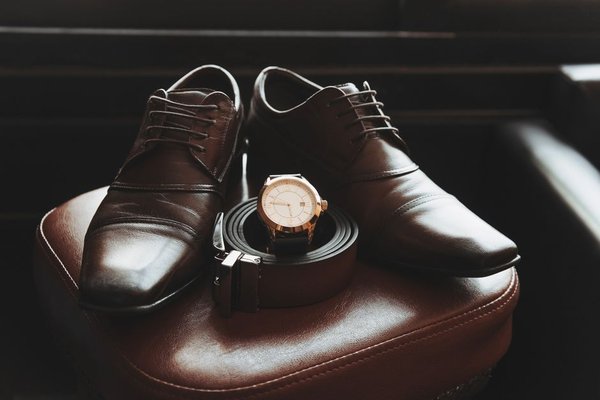
A good belt-and-watch combination is a small detail that can make an outfit feel noticeably more considered. The trick is not to make every accessory identical. Think in families instead: leather should relate to leather, metal should relate to metal, and the level of formality should make sense across the outfit. This men’s belt and watch pairing guide keeps those decisions simple enough to use while getting dressed.
Start With Leather Colour When Your Watch Has a Leather Strap
If your watch has a leather strap, compare its colour with your belt first. Black is straightforward: a black belt generally looks most coherent with a black leather watch strap, particularly with suits, dress trousers, or polished black shoes. Brown gives you more freedom because it naturally appears in shades from tan and cognac to chestnut and dark chocolate.
You do not need an exact shade match. A medium-brown belt can work comfortably with a slightly darker brown watch strap as long as both have a similar warmth. What usually looks less deliberate is mixing very different colour families, such as a formal black belt with a bright tan leather strap.
A useful men’s accessory matching rule is to aim for harmony rather than duplication. If your shoes, belt, and leather watch strap live in the same broad colour family, the outfit will usually read as coordinated even when the shades differ.
Use the Buckle and Watch Case as Metal References
After leather, look at the belt buckle and watch case. Silver-toned steel, gold, rose gold, gunmetal, and black hardware create different impressions. With formal or business clothing, matching the broad metal colour usually produces the cleanest result. A stainless-steel watch case works naturally with a silver-toned buckle, while a gold-tone watch looks more intentional beside warmer gold hardware.
The finishes do not have to match perfectly. A brushed steel buckle can still work with a polished steel watch case because the eye notices the overall metal colour more than the exact surface. Two-tone watches are especially useful because they can bridge silver and gold details.
Other jewellery does not have to control the entire outfit. A gold wedding ring can stay gold even if your everyday watch is steel. Belt and watch coordination is about creating a relationship between the most visible accessories, not forcing every metal detail to be identical.
Let Formality Decide How Strict the Matching Should Be
With suits and dress shoes
Formal outfits reward closer coordination. Black Oxford shoes, a black belt with a silver buckle, and a dark suit pair easily with a slim watch on a black leather strap and silver-toned case. With brown dress shoes, keep the belt and leather strap within the brown family and relate the buckle to the watch case.
With business-casual outfits
You can relax the colour matching. Dark brown loafers, a medium-brown belt, and a chestnut watch strap can look better than three accessories in exactly the same shade. Texture can vary too. Smooth leather, lightly grained leather, and suede can coexist when their colours and formality feel related.
With jeans and casual clothing
Casual outfits give you the most freedom. A field watch on canvas, a dive watch on rubber, or a steel-bracelet sports watch does not need to match the belt material. The better question is whether the watch suits the character of the outfit.
How to Pair a Belt With a Metal-Bracelet Watch
A metal bracelet makes the process easier because there is no watch leather to coordinate. Match your belt primarily to your shoes, then use the bracelet as a reference for the buckle if you want a polished finish. A stainless-steel bracelet with a silver buckle is the easiest example, while a two-tone bracelet gives you more flexibility.
Do not overthink tiny hardware details. If your belt buckle is silver but a jacket zip is darker gunmetal, that difference is unlikely to matter. The most useful men’s style tips focus on details that are visible enough to affect the overall impression.
A Practical Smart-Casual Example
Imagine you are dressing for dinner in navy chinos, a white Oxford shirt, and dark brown loafers. Start with a dark brown belt. If you choose a leather-strap watch, a brown strap is the easiest fit, but it can be lighter or darker than the belt. If the buckle is silver, a stainless-steel or silver-toned watch case ties the accessories together.
Now swap that watch for one with a glossy black strap and a bright yellow-gold case. The outfit is still wearable, but the watch introduces both a new leather colour and a new metal direction. Nothing is forbidden; it simply looks less unified. That contrast is a useful test when you are unsure about a pairing.
Common Pairing Mistakes
One mistake is chasing exact shades. Leather changes with age, wear, polish, and lighting, so near matches are often more natural. Another is ignoring texture and formality. A highly polished dress belt can feel strange beside a thick distressed-leather watch strap even if both are brown.
Over-coordination is another trap. You do not need your belt, shoes, watch strap, briefcase, wallet, bracelet, and every metal detail to match. Prioritise the visible pieces and let smaller accessories support the look.
Build a Few Reliable Combinations
Most men only need a few dependable options. A black belt with a simple silver buckle covers black dress shoes and works well with a black leather-strap watch. A medium- or dark-brown belt handles brown footwear and most smart-casual outfits. Add a stainless-steel bracelet watch and you have a versatile option that avoids the leather-matching question entirely.
Once those combinations become familiar, belt and watch coordination feels automatic. You can then experiment with warmer browns, suede, textured straps, two-tone watches, or less conventional hardware without losing the basic visual logic.
FAQ
Does a watch strap have to match a belt exactly?
No. Aim for the same broad colour family, especially with formal clothing. Brown straps and belts can vary in shade and still look deliberate. Exact matching is optional.
Should my belt buckle match my watch case?
For dressy outfits, matching the broad metal tone is a reliable choice. Silver with silver and gold with gold usually looks cohesive. Casual outfits allow more mixing when the hardware is understated.
Can I wear a brown belt with a black watch strap?
Yes, especially in casual clothing, but it creates more contrast. With tailoring or dress shoes, keeping black leather with black and brown leather with brown usually produces a cleaner result.
What if my watch has a steel bracelet?
Match the belt to your shoes first. If you want extra coordination, choose a buckle that relates to the bracelet’s metal tone. A silver-toned buckle with a stainless-steel bracelet is an easy pairing.
The Rule That Makes Pairing Easy
Keep leather colours in the same family, coordinate the main metal finishes when the outfit is formal, and loosen the rules as your clothes become more casual. That gives you enough structure to look intentional without making your accessories feel over-planned. When the belt and watch quietly agree with each other, the rest of the outfit tends to look sharper too.